THE JOURNEY IT TAKES
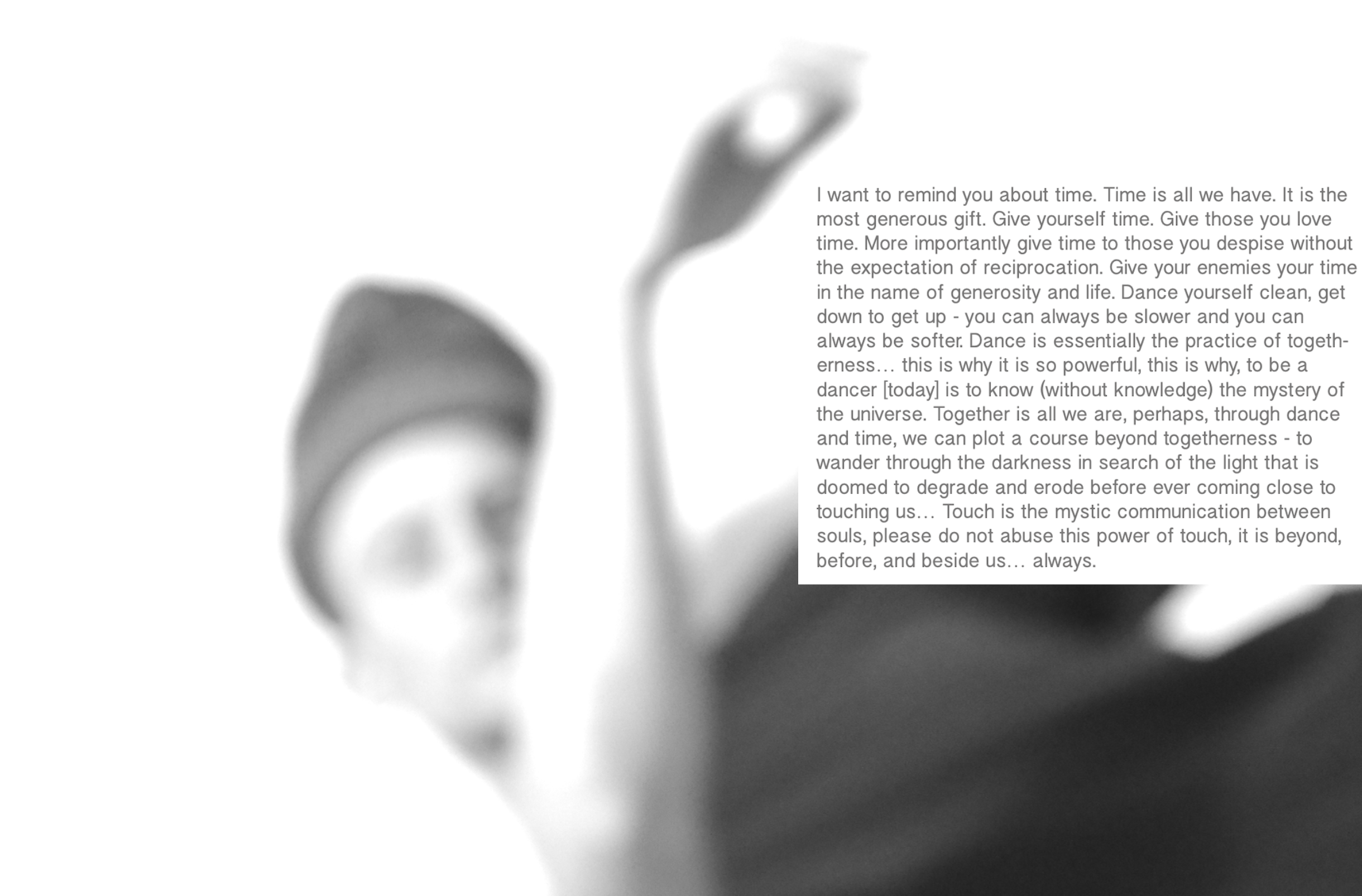
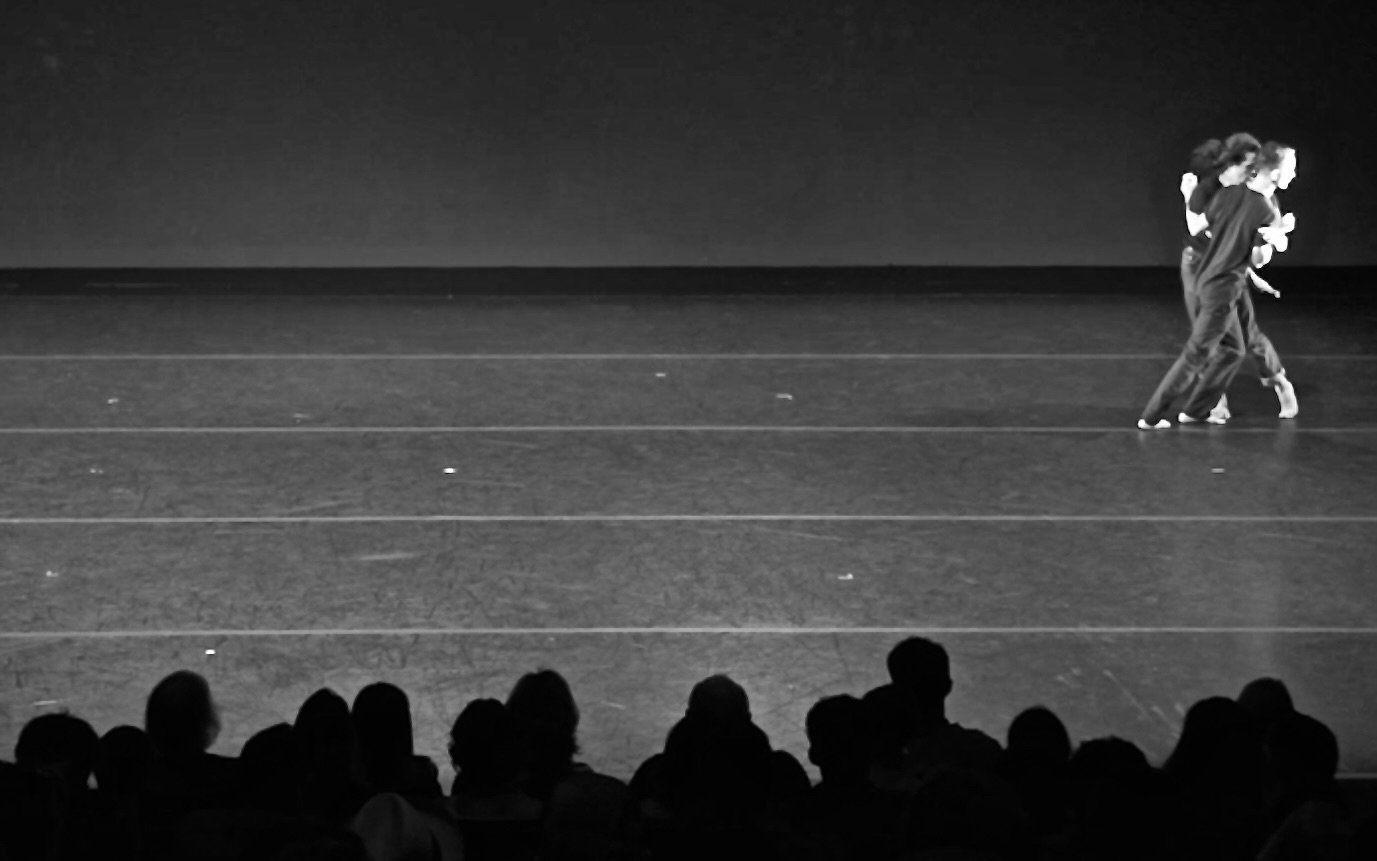
The Journey it Takes was written and performed by Travis Clarke and Benjamin Kamino and performed at On the Boards. Having never met or spoken to each other, it was a movement and sound piece that was created through months of non-verbal exchanges prior to meeting for two public performances. Simultaneously touching, thrilling, and melancholy, this project explored a literal freefall into the unknown. Much of this work was based on the Voyager missions* (which could also be described as a freefall into the unknown.) In 1977, humans sent Voyager one and two out into space hoping to meet something that we have no capacity to understand. As if we were going to have a conversation. And, actually, this is amazing. This is a grand, broad gesture; an attempt to truly understand something other than ourselves. To understand something so foreign. When Voyager approaches with its contents of recordings and messages, the recipient is caught off guard, never expecting such a foreign thing to pass over its skies. However, regardless of if the intended messages were understood, or not, Voyager, like most things in life, eventually leaves. It was once here the recipient knows, but has continued on to a different reality that we cannot know. When human experiences (such as love) and Voyager approach they begin as something vague in the horizon. They leave in the same way.
*About The Voyager missions from The Planetary Society: “Each Voyager spacecraft has a golden phonograph record affixed to its side, intended as time capsules from Earth to any extraterrestrial life that might find the probes sometime in the distant future. They are inscribed with a message from Jimmy Carter, the U.S. President at the time of launch, which reads: “This is a present from a small, distant world, a token of our sounds, our science, our images, our music, our thoughts and our feelings. We are attempting to survive our time so we may live into yours.” The covers of the records have several images inscribed, including visual instructions on how to play them, a map of our solar system’s location with respect to a set of 14 pulsars, and a drawing of a hydrogen atom. They are plated with uranium – its rate of decay will allow any future discoverers of either of the records to calculate when they were created.”